

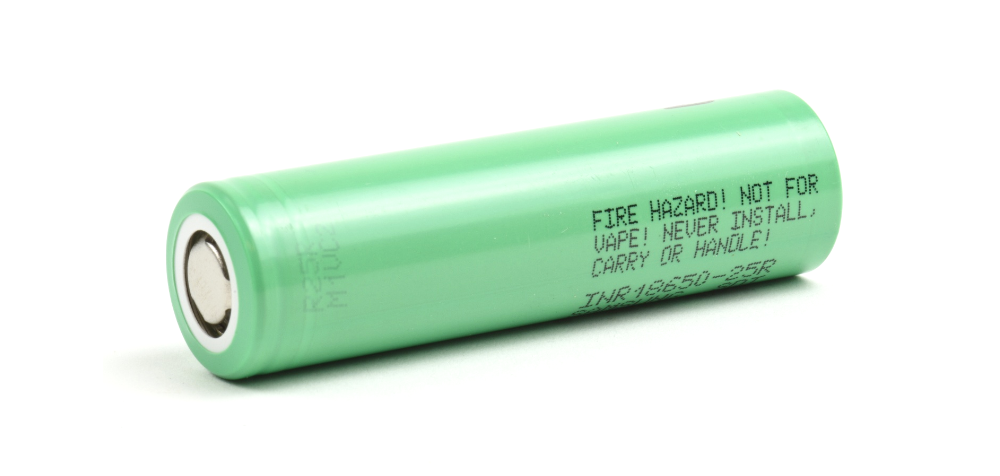
MEA Forensic investigated the failure of a lithium-ion battery and provided insight into the causes.
The Event:
Lithium-ion batteries are found in many consumer products because they store a lot of energy and can deliver high currents, but these appealing design features also create the potential for them to fail dramatically. MEA was hired to investigate the failure of a lithium-ion battery that was in someone’s pocket and caused severe burn injuries when the battery exploded. The internal components of the battery were ejected and the steel case fused to the pocket fabric.
Our Analysis:
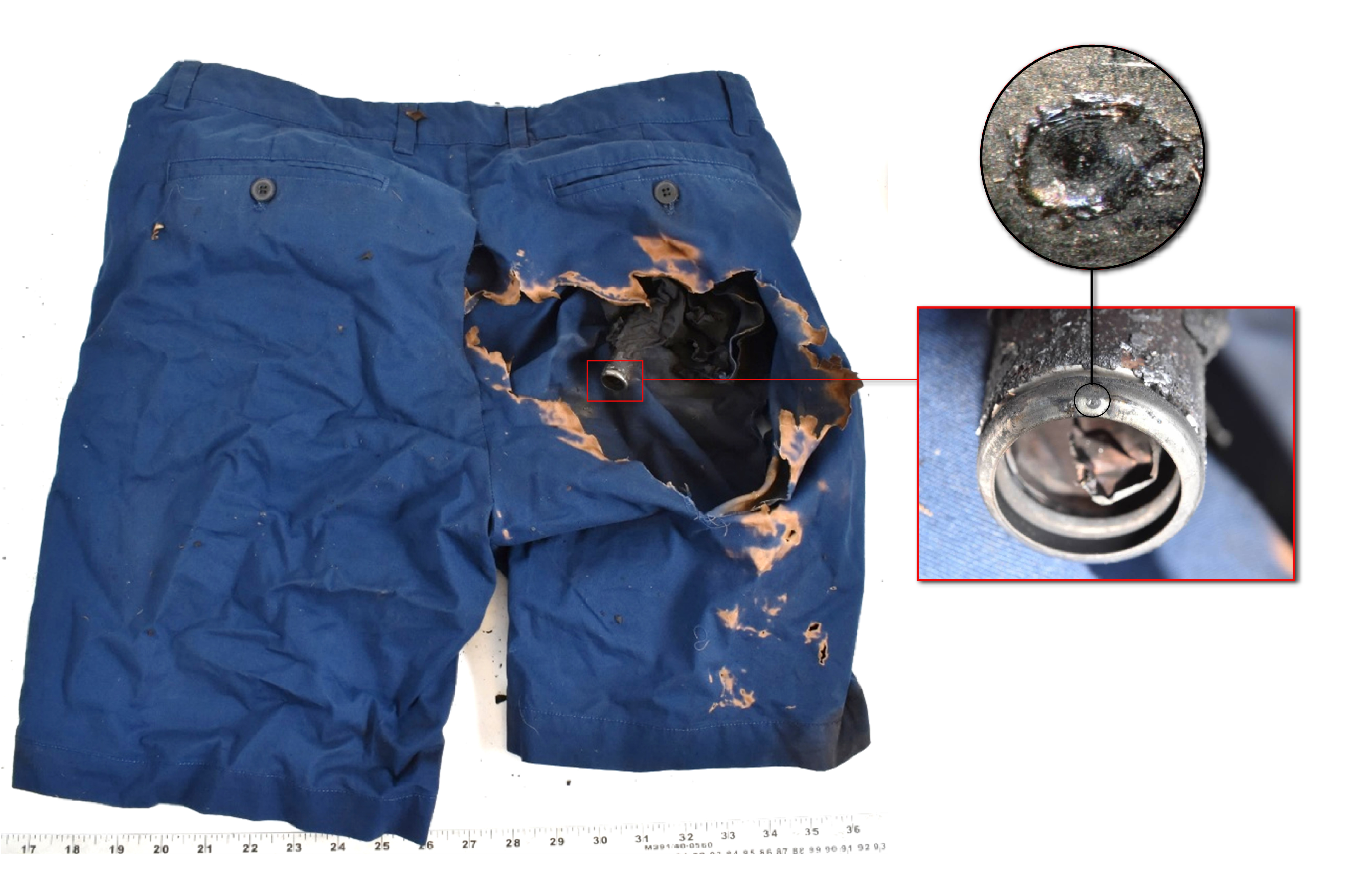
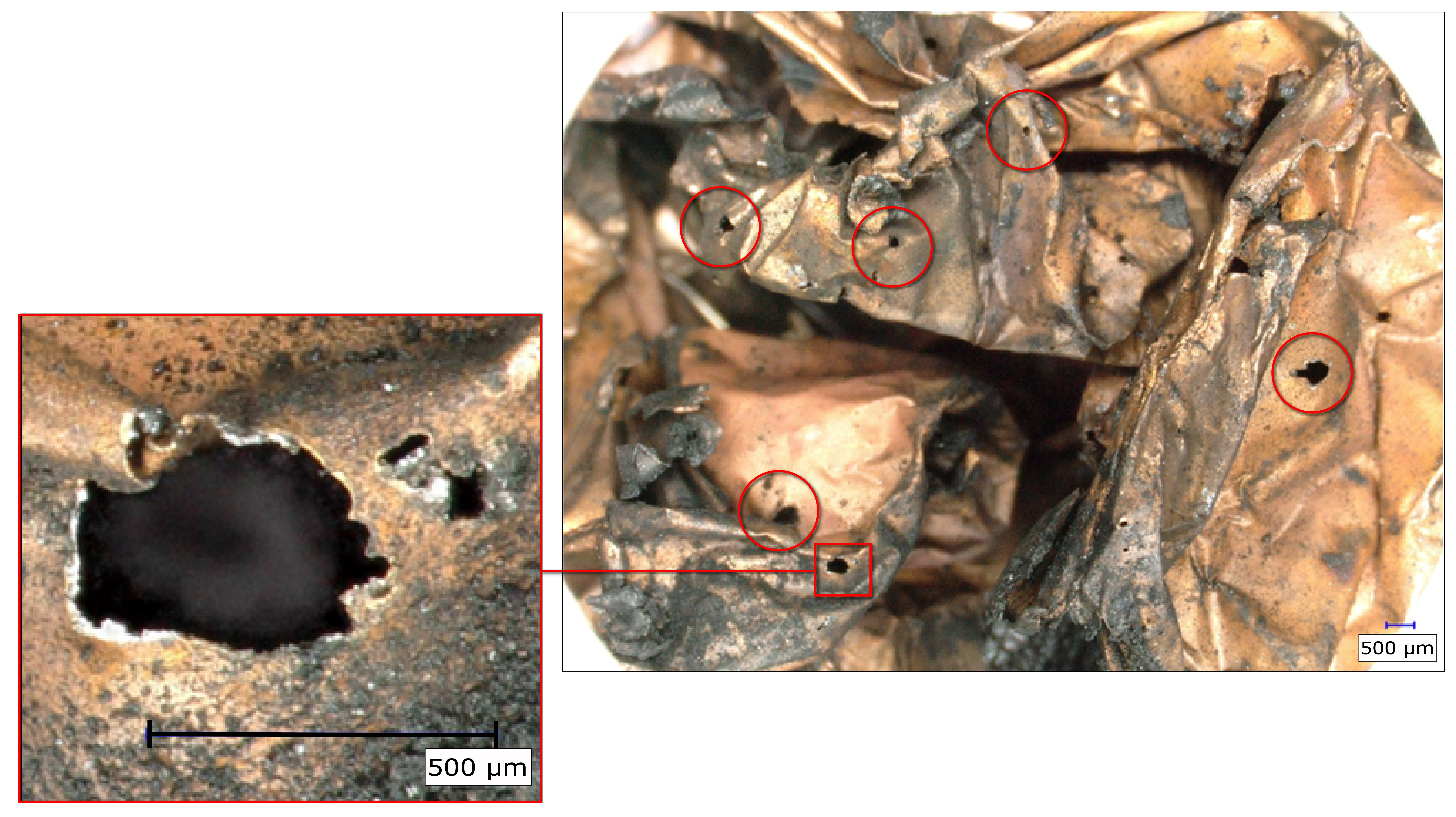
Digital microscopy revealed a small pit of melted case material near the positive terminal cap, pictured above, consistent with electrical arcing caused by a short circuit (a direct and highly conductive connection) between the case and the cap. We also found small perforations in the copper foil electrode ejected from the battery, indicating internal short circuits. The evidence shows that an initial short circuit between the end cap and the case caused abnormally high current to flow through the cell. This led to a rapid temperature increase, the breakdown of the polymer separator between the two electrodes, and additional internal short circuits. This sequence of events, known as ‘thermal runaway,’ resulted in catastrophic high-temperature failure. In this case, the flaming contents of the cell were ejected from the battery.
The plastic wrap around the outside of each lithium-ion battery is designed to insulate the end cap (which is connected to the positive electrode) from the metal case (which is connected to the negative electrode). This insulating plastic wrap must have been compromised, allowing a conductive connection between the case and the cap, causing the initial short circuit. It is likely that a conductive object in the same pocket, like a key or loose coinage, contacted the battery and created a conductive connection. The same object could also have damaged the plastic wrap.
We concluded that improper storage and handling caused the battery failure. However, we also noted that while newer lithium-ion batteries typically carry a warning against loose storage in a purse or pocket, no such warnings were provided with the older batteries in this case.
The Result:
Our detailed inspection and analysis of the evidence generated a clear and supportable explanation of the cause of the lithium-ion battery failure.