





This summer, the U.S. Department of Transportation’s National Highway Traffic Safety Administration (NHTSA) released preliminary estimates of crash fatalities for 2020. Their report found that, while vehicles traveled 13.2% fewer miles, vehicle crashes caused 7.2% more fatalities than the previous year. The NHTSA report identified risky driving behaviors such as impaired driving, speeding, and lack of seatbelt use as the main contributors behind the increased fatality rate. Read the NHTSA press release.
To help you prepare for these types of cases, our experts in Human Factors, Collision Reconstruction and Injury Biomechanics present a webinar on the investigation and analysis of collisions involving impaired driving, speeding, and seatbelt use. We hope you will join us on October 13th.
Date: |
Time: |
Where: |
| October 13th, 2021 | 10:00 AM Pacific / 1:00 PM Eastern | On Zoom |
REGISTER NOW
This presentation is crafted specifically for legal and insurance professionals. Our presenters are certified continuing education providers by the California State Bar, and our courses are accredited by the Law Societies of British Columbia and Ontario.
For more information and to get your name on our mailing list, contact Mireille Maheu.
The presenters – Impaired Driving, Speed & Seatbelts

Kurt Ising, MASc PEng
 |
Kurt Ising leads the firm’s research into how drivers, riders and pedestrians detect, perceive, and respond to hazards. Kurt’s interest in human factors started with research into how far away drivers can see pedestrians at night: He developed a method for measuring light levels at an accident location and objectively assessing driver visual performance. Since then, he has published peer-reviewed research on nighttime visibility, perception-response time and the effects of driver distraction. You can read about his work on the effects of cognitive distraction on brake motor response on our website. Read Kurt's full bio. |
Kurt's presentation:
- How response time is affected by risky pandemic behaviors
- Substance use and driving ability
- The role of speed in crash avoidance
Russell Gish, PhD PE
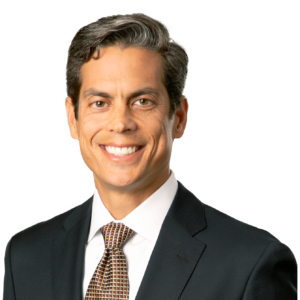 |
Dr. Russell Gish specializes in crashworthiness, crash performance and crash reconstruction. Using computer modeling and laboratory crash testing, he has developed designs for front, side, and rear crash performance involving structure, bumper systems, and suspension. His PhD work, done at the University of California, Berkley, established the mathematical foundation for a new method of analyzing crash forces and the resulting car damage. He has also published research on the use of Finite Element, a simulation software, to predict crush and analyze pole impacts. Read Russell's full bio |
Russell's presentation:
- How do you know that you have a high-speed case?
- Evidence to determine speeds in collision reconstruction
- Effect of speed on crash severity & liability
Benjamin Elkin, PhD PEng
 |
As a Biomechanical Engineer, Dr. Ben Elkin assesses the causal relationship between an event and an injury by comparing forces applied to the body in an incident to the mechanism and threshold of injury. His current research on the biomechanics of brain injury focuses on the response of the brain to head impacts and other indirect exposures that have been associated with concussions. With a team of MEA scientists, he has published research on a possible explanation for concussion symptoms in some individuals following a rear-end collision. Read Ben's full bio |
Ben's presentation:
- Impact of higher vehicle speeds on injury potential
- Seatbelt effectiveness in high-speed collisions and rollovers
 add to: