



MEA Forensic’s commitment to high-quality technical investigations is built on a solid foundation of objective, peer-reviewed research—some of which our engineers and scientists conduct and publish themselves. During this webinar, our experts in Video Analysis, Collision Reconstruction, and Injury Biomechanics will share how specific cases led them to pursue comprehensive research projects, which resulted in peer-reviewed publications. Their scientific approach not only allows MEA Forensic to address critical questions in the matters discussed, but continues to inform our investigative techniques and benefit the broader scientific community.
In this CLE-eligible* webinar, attendees will gain a deeper understanding of how MEA Forensic’s self-funded research capabilities fortifies our approach, ultimately leading to more solid, evidence-based reports for our clients. We hope you will join us.
Date: |
Time: |
Where: |
| November 6th, 2024 | 10:00 AM Pacific / 1:00 PM Eastern | On Zoom |
REGISTER HERE
*Our presenters are certified continuing education providers by the California State Bar. Our courses are accredited by the Law Societies of British Columbia and Ontario. Alberta lawyers, consider including this course as a CPD learning activity in your annual Continuing Professional Development Plan.
For more information and to get your name on our mailing list, contact Mireille Maheu.
The presenters – Scientific Research

Cole Young, MS PE
 |
Cole Young has reconstructed hundreds of crashes and injury-producing events, has testified in court as an expert witness, and leads MEA’s Video Analysis group in the US. Cole analyzes video from all kinds of sources: body-worn cameras, dashcams, surveillance systems and cell phones. He routinely extracts information such as vehicle position, movement, speed and timing from video, and has also analyzed videos from shootings and slip, trip and fall cases. Read Cole's full bio. |
Cole's presentation:
- Basic camera considerations in forensic work
- How reconstruction experts use 3D laser scans to measure things from video
- Case-specific uncertainty in positions and speeds calculated from video
Ian Miller, MEng PE
 |
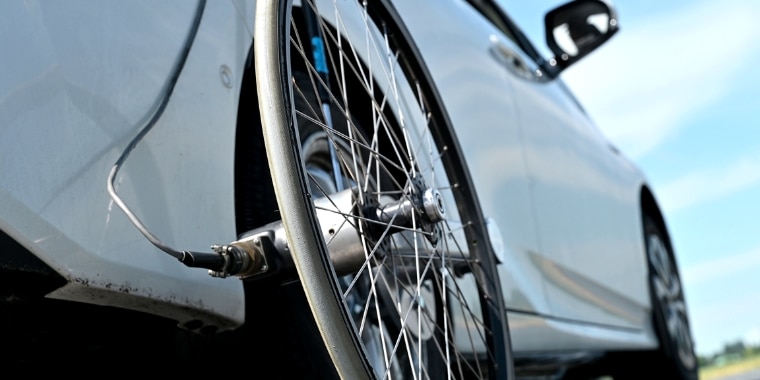
A member of MEA’s Collision Reconstruction group, Ian Miller investigates crashes involving cars, trucks, buses, motorcycles, bicycles, and pedestrians. Ian routinely uses advanced systems, like the Bosch Crash Data Retrieval system and Toyota’s Techstream diagnostic software to download event data from cars. Ian also uses simulation software and engineering calculations to reconstruct crashes based on physical evidence, like vehicle damage and tire marks on the road. Ian is leading MEA Forensic’s ongoing research into anti-lock brake systems. Read Ian' full bio. |
Ian's presentation:
- How do anti-lock brake systems (ABS) work?
- The results of braking tests on dry asphalt and concrete road surfaces
- What the ABS research means for our case work
Benjamin Elkin, PhD PEng
 |
Dr. Ben Elkin is a senior biomechanical engineer and holds a PhD in Biomedical Engineering with a focus on Biomechanics from Columbia University. He is actively involved in research projects at MEA, including studies of brain injury and the biomechanics of falls. Ben currently chairs the ASTM F13.40 Research Subcommittee on Pedestrian/Walkway Safety and Footwear, helping to improve the way floor-friction measurements are made in forensic investigations. Read Ben's full bio. |
Ben's presentation:
- Experimenting on human subjects
- The biomechanics of falls on stairs and slippery floors
- Using human subjects research to answer questions of causation in fall-related cases
 add to: